Caution
There is a know issue for thr Mental Health question in that there are several records for which people have data in a variable that should have been skipped. This will be fixed in future iterations of this report
There is a know issue for thr Mental Health question in that there are several records for which people have data in a variable that should have been skipped. This will be fixed in future iterations of this report
Date Added : 2005-07-01
The purpose of this variable is to help determine the pre-injury functional level of the Model System participants. This variable was taken from the wording of the Long Form of the 2000 Census, which asks about current function. To meet our needs, this question was revised to ask specifically about the patient’s specific function prior to the TBI regarding:
[X] Form 1
[ ] Form 2
Pre-Injury History (participant or proxy)
Pre-Injury long-lasting conditions are based on self-report. If participant views as ‘long-lasting’ then code as such.
Alcoholism can be considered a preinjury condition if it interferes with the person’s functioning.
Having glasses/hearing aid does not constitute a severe impairment. If glasses/hearing aid cannot correct the severe vision/hearing impairment, however, then code ‘yes’.
Previously, participants were asked about any preinjury “Blindness, deafness, or a severe vision or hearing impairment” until the questions were split into 2 questions on 7/1/2020 - “Blindness or a severe vision impairment” and “Deafness, or a severe hearing impairment”.
Questions were taken from the long form of the 2000 census and modified to ask about premorbid function instead of current level of function. (Developed by a group headed by Flora Hammond).
Variable was successfully pilot tested in first quarter 2005.
| Characteristic | N = 16,084 |
|---|---|
| A condition that substantially limited one or more basic physical activities such as walking, climbing stairs, reaching, lifting or carrying:, n (%) | |
| No | 14,233 (90) |
| Yes | 1,653 (10) |
| Missing | 198 |
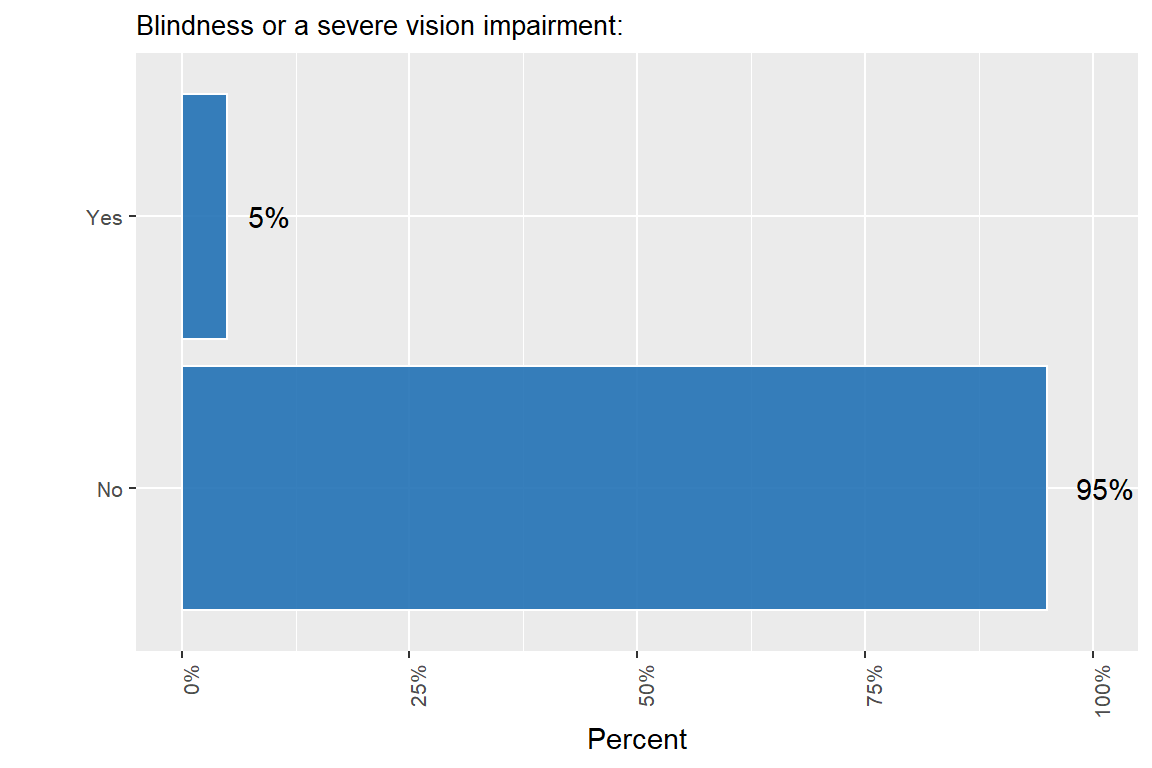
| Blindness or a severe vision impairment:, n (%) | |
| No | 3,105 (95) |
| Yes | 152 (4.7) |
| Missing | 12,827 |
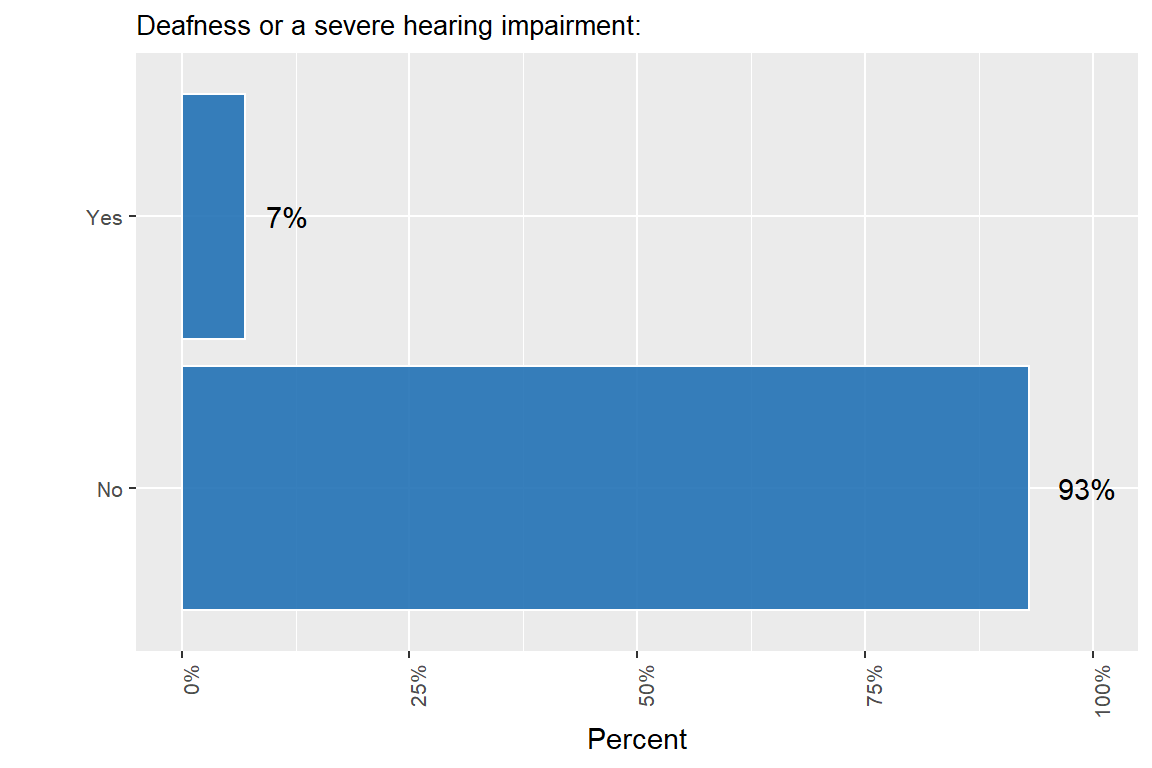
| Deafness or a severe hearing impairment:, n (%) | |
| No | 3,024 (93) |
| Yes | 233 (7.2) |
| Missing | 12,827 |
99% of the abstracted people have valid data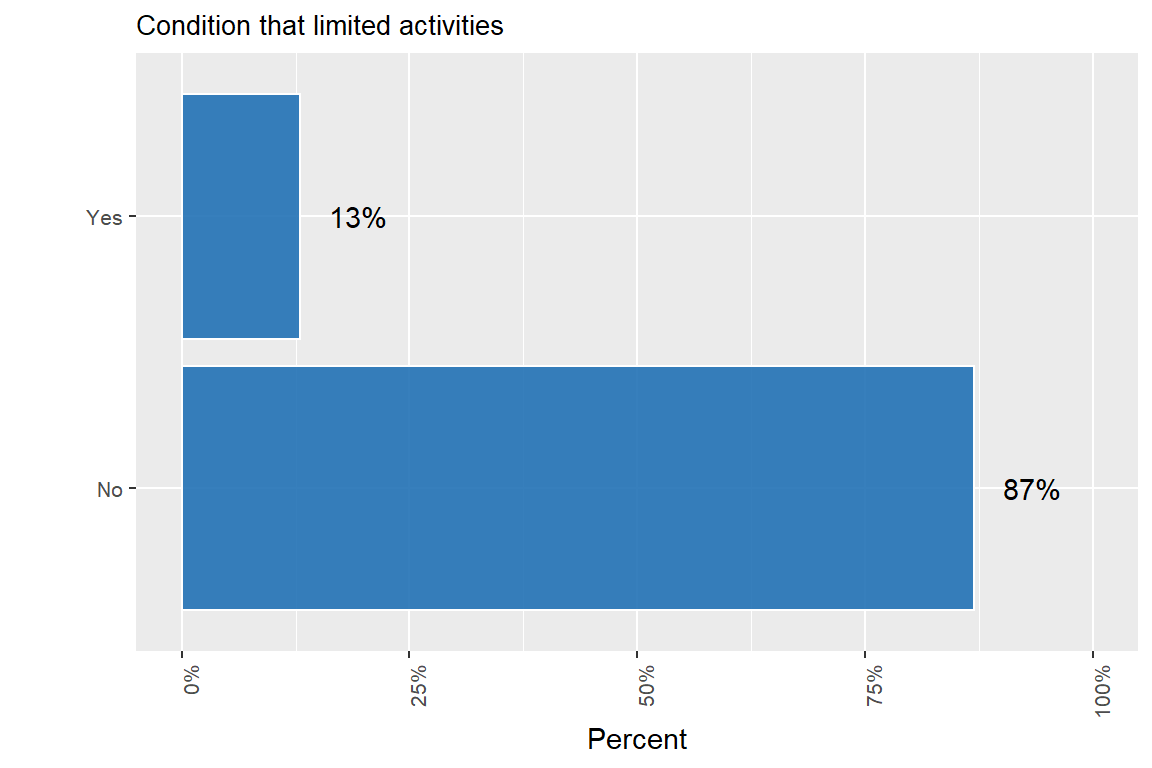
Date Added : 2005-07-01
The purpose of this variable is to help determine the preinjury functional level of the Model System participants. This variable was taken from the wording of the Long Form of the 2000 Census, which asks about current function. To meet our needs, this question was revised to ask specifically about the patient’s difficulty in doing the following activities due to a physical, mental, or emotional condition that has been present for at least 6 months:
[X] Form 1
[ ] Form 2
Pre-Injury History (participant or proxy)
Include effects due to alcoholism.
If respondent asks for clarification of what is meant by “mental and emotional conditions”, the following explanation is acceptable: “Mental conditions affect a person’s ability to think or their intelligence. Examples include learning disabilities, dementia, or intellectual disability. Emotional conditions refer to psychological or psychiatric problems.”
If the participant was not working at the time of injury (e.g. unemployed, retired), code Pre-Injury Limitation -Working at a Job or Business” [PrelimWork] on the basis of estimated difficulty had he/she been working. Probe to determine if, at the time of injury, they had physical, mental, or emotional problems that–if they had been working–would have caused them difficulty and which they had had for the past 6 months. If problems has been present for at least 6 months, then code “Yes”. Otherwise code “No”.
Questions were taken from the long form of the 2000 census and modified to ask about premorbid function instead of current level of function. (Developed by a group headed by Flora Hammond.)
Variable was successfully pilot tested in first quarter 2005.
| Characteristic | N = 16,084 |
|---|---|
| Learning, remembering, or concentrating:, n (%) | |
| No | 14,103 (89) |
| Yes | 1,778 (11) |
| Missing | 203 |
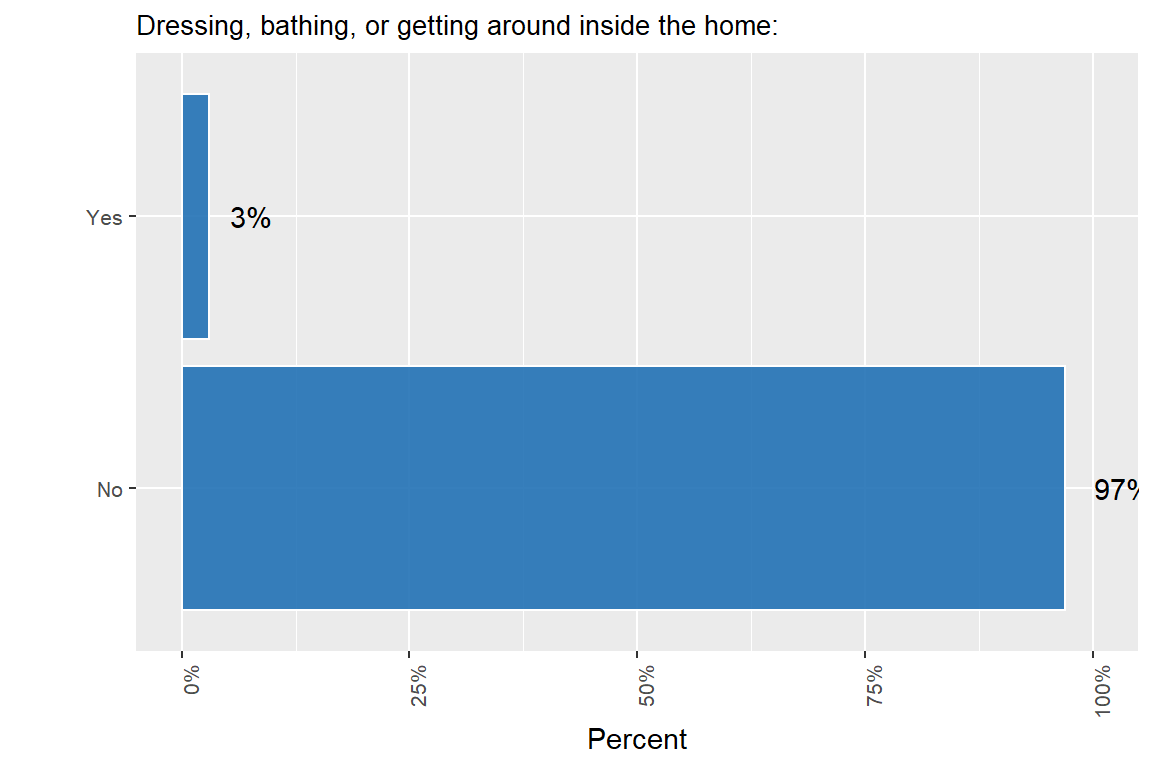
| Dressing, bathing, or getting around inside the home:, n (%) | |
| No | 15,383 (97) |
| Yes | 510 (3.2) |
| Missing | 191 |
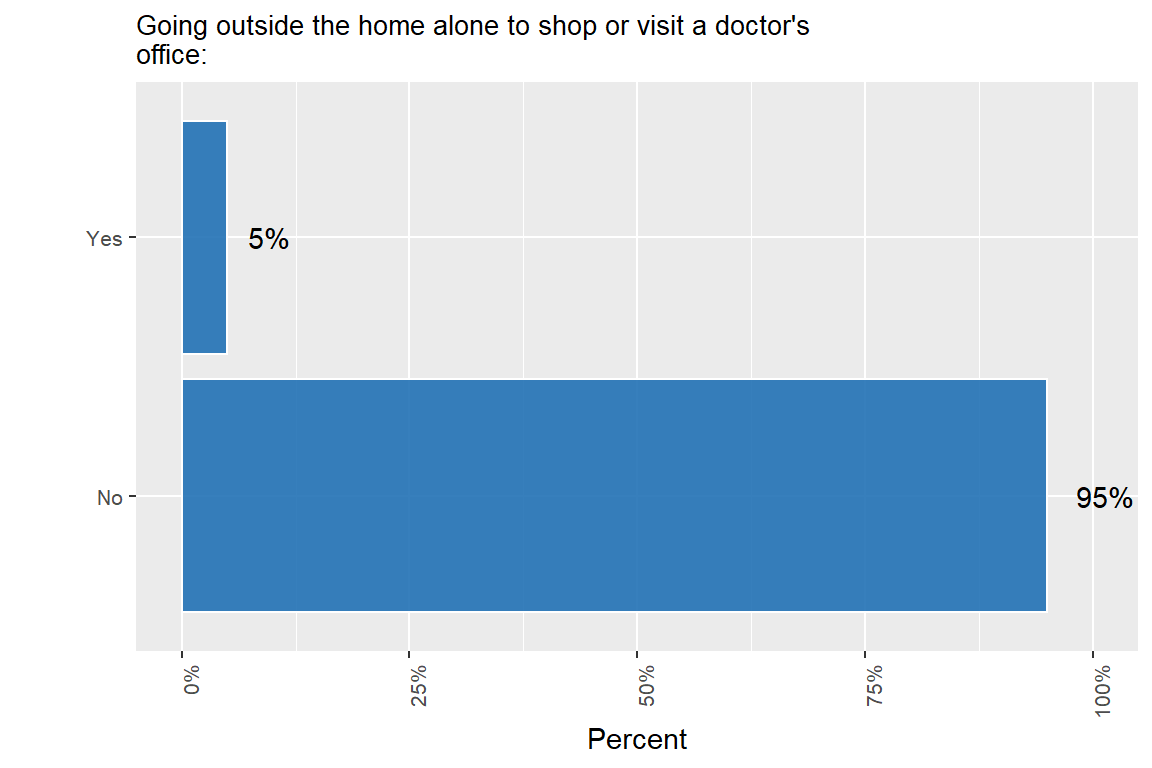
| Going outside the home alone to shop or visit a doctor's office:, n (%) | |
| No | 15,039 (95) |
| Yes | 850 (5.3) |
| Missing | 195 |
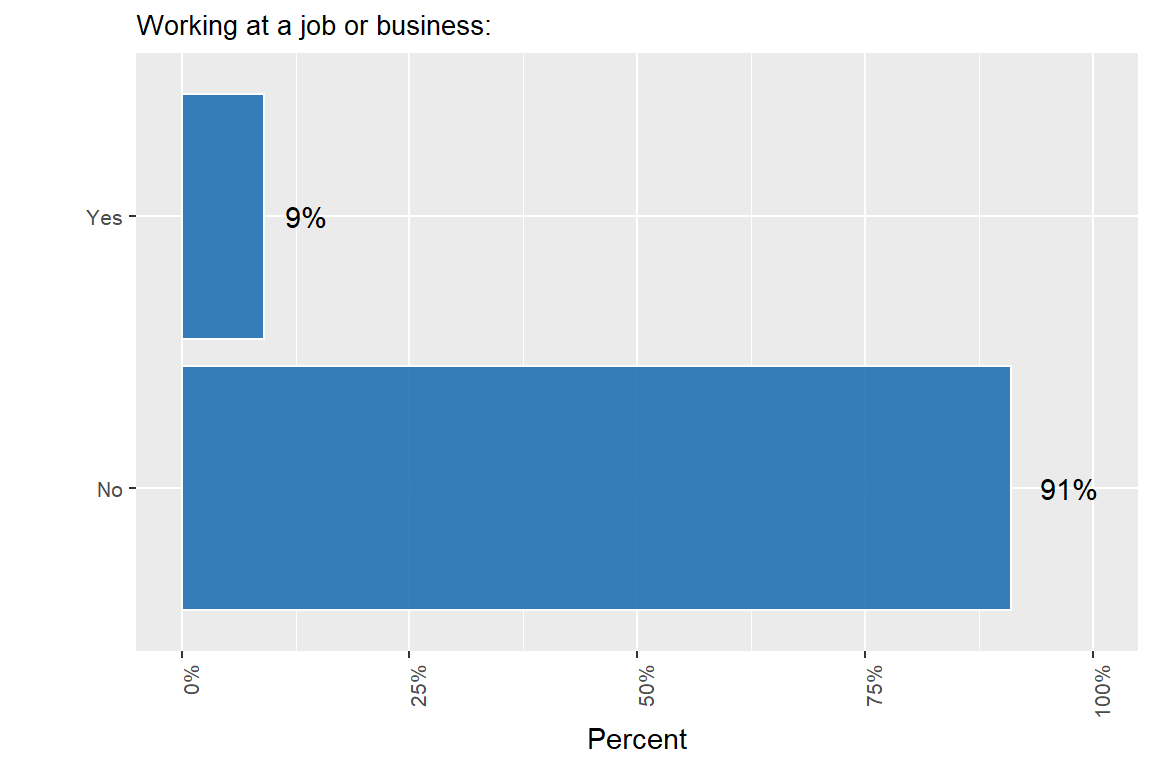
| Working at a job or business:, n (%) | |
| No | 14,463 (91) |
| Yes | 1,385 (8.7) |
| Missing | 236 |
99% of the abstracted people have valid data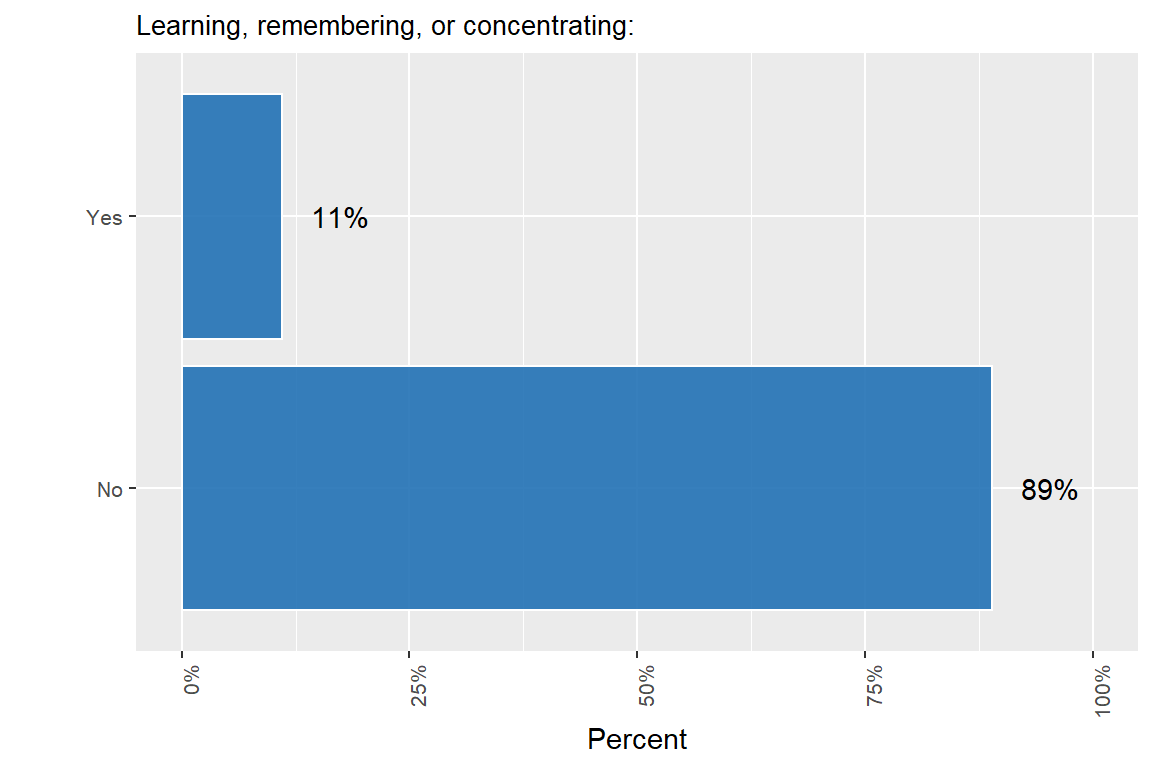
Date Added : 2007-07-01
Asks “Have you ever received treatment for any mental health problems? (Examples include depression, anxiety, schizophrenia, and alcohol/drug abuse).”
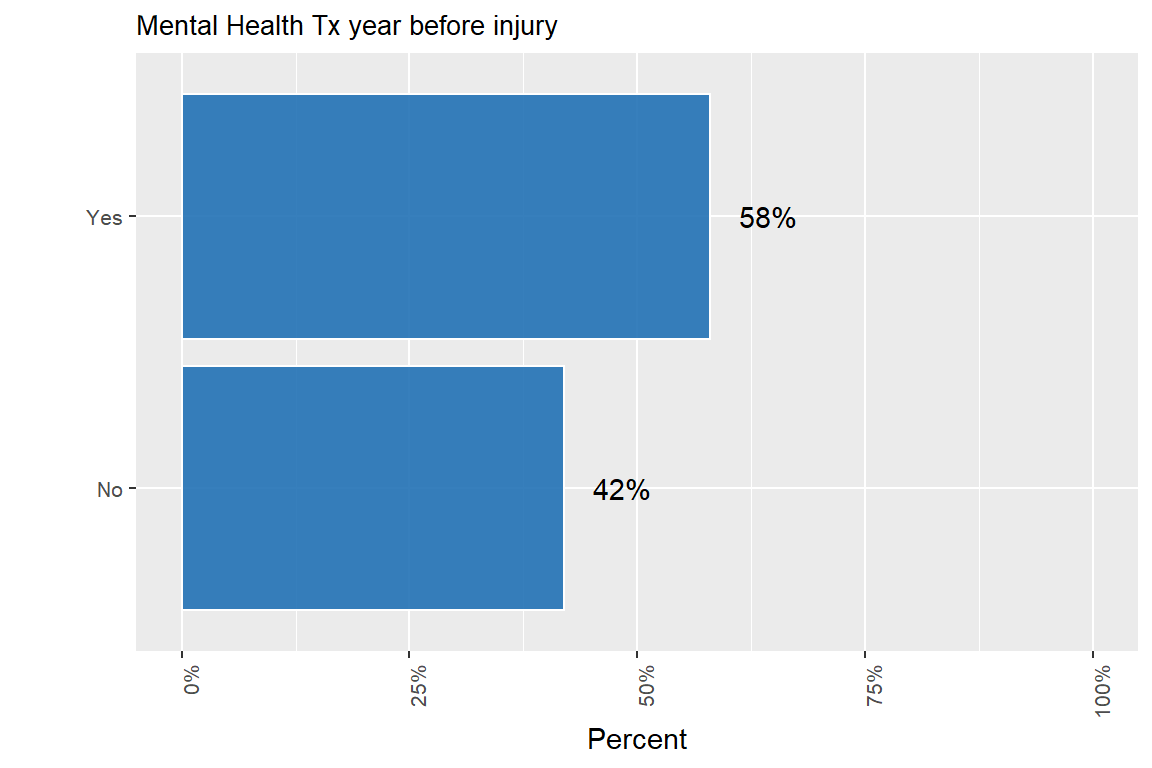
If yes, this question is followed by up by asking “Did you receive treatment for any mental health problems in the year before the injury?”
[X] Form 1
[ ] Form 2
Form 1 Pre-Injury History (participant or proxy)
Taking a prescribed medication (e.g. antidepressants) should be considered ‘treatment’ for the underlying condition.
Treatment for ADD/ADHD should NOT be included as treatment for mental health problems.
| Characteristic | N = 14,337 |
|---|---|
| Have you ever received treatment for any mental health problems? (Examples include depression, anxiety, schizophrenia, and alcohol/drug abuse), n (%) | |
| No | 10,765 (78) |
| Yes | 3,118 (22) |
| Missing | 454 |
| If yes, did you receive treatment for any mental health problems in the year before injury?, n (%) | |
| No | 1,305 (42) |
| Yes | 1,797 (58) |
| Missing | 11,235 |
97% of the abstracted people have valid data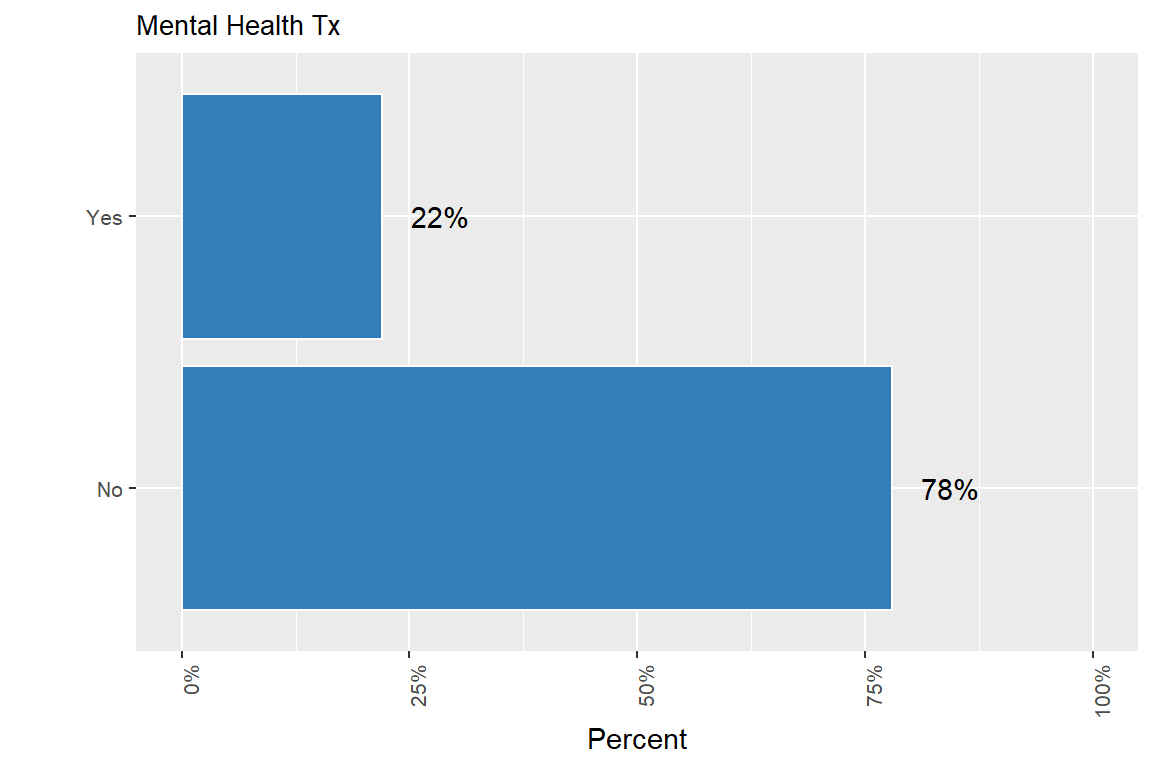
Date Added : 2009-01-01
Determine if the person with brain injury had any psychiatric hospitalizations prior to his/her injury by asking;
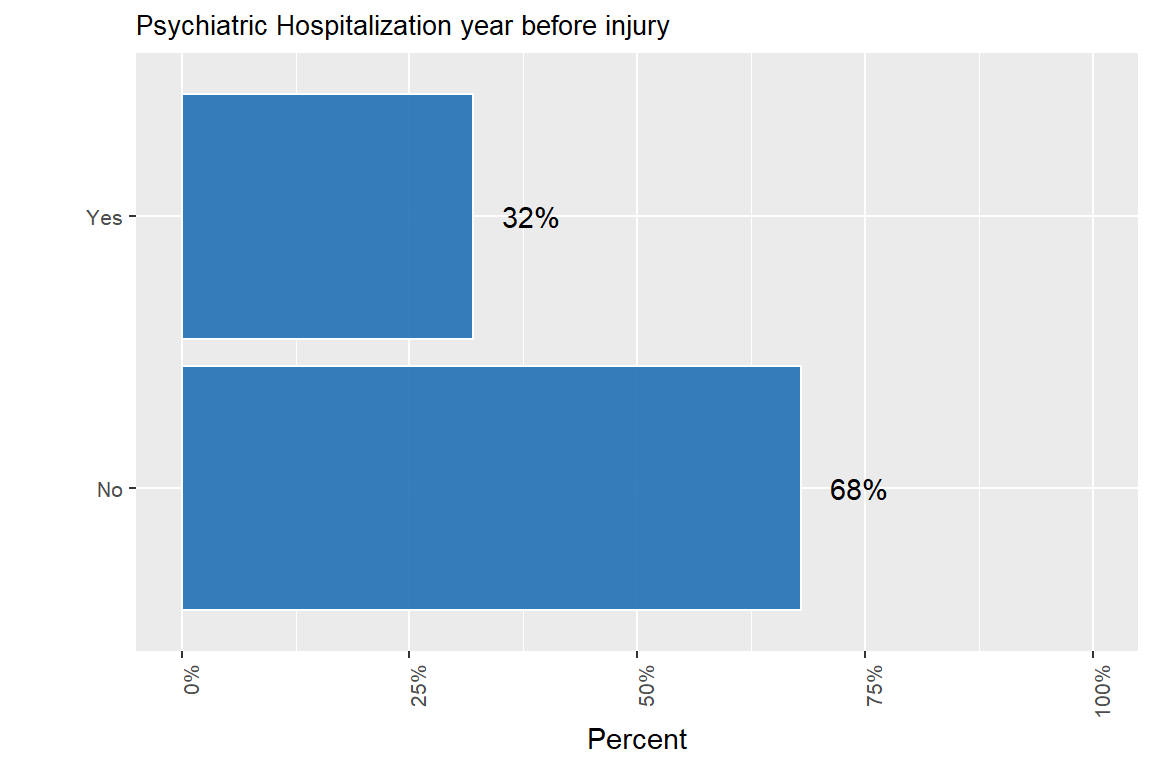
This question is followed by asking whether it happened in the year before injury;
[X] Form 1
[ ] Form 2
Form 1 Pre-Injury History (participant or proxy)
| Characteristic | N = 13,027 |
|---|---|
| Have you ever been hospitalized for a psychiatric problem?, n (%) | |
| No | 11,919 (93) |
| Yes | 920 (7.2) |
| Missing | 188 |
| If yes, were you hospitalized for a psychiatric problem in the year before the injury?, n (%) | |
| No | 627 (68) |
| Yes | 301 (32) |
| Missing | 12,099 |
99% of the abstracted people have valid data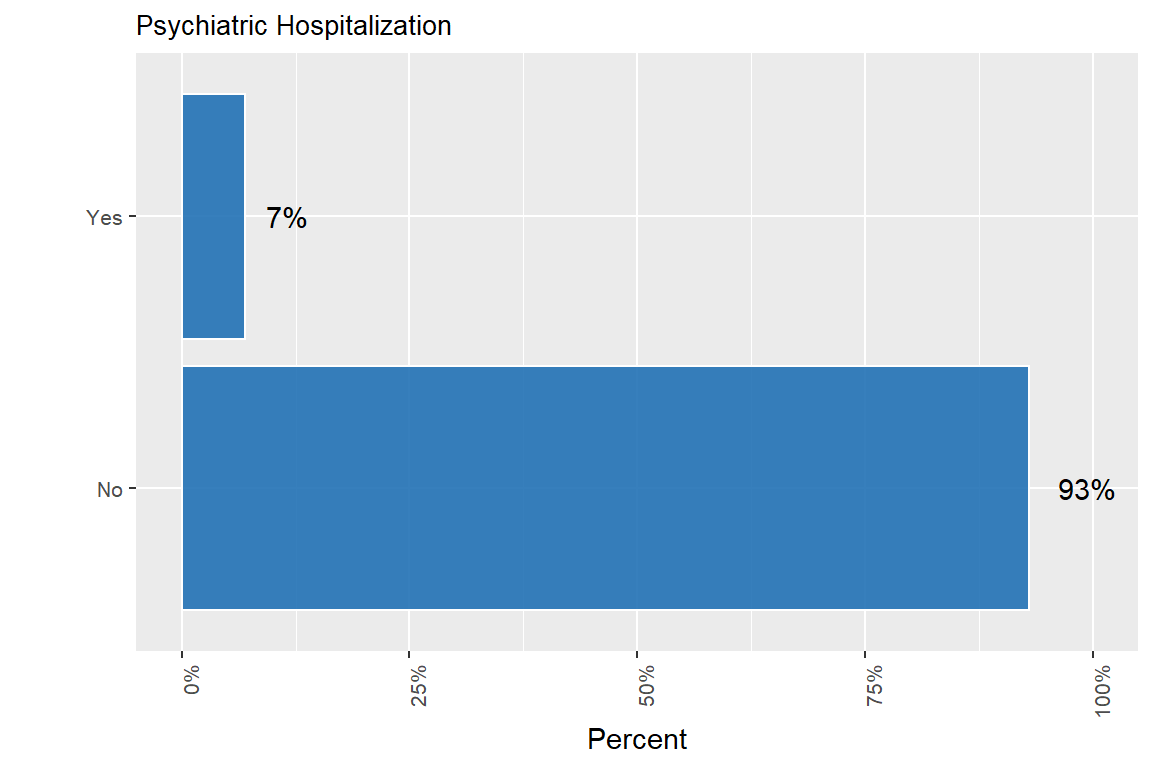
Date Added : 2007-10-01
Determine if the person with brain injury has attempted suicide in the past year.
Form 1
Asks “Have you ever attempted suicide?”
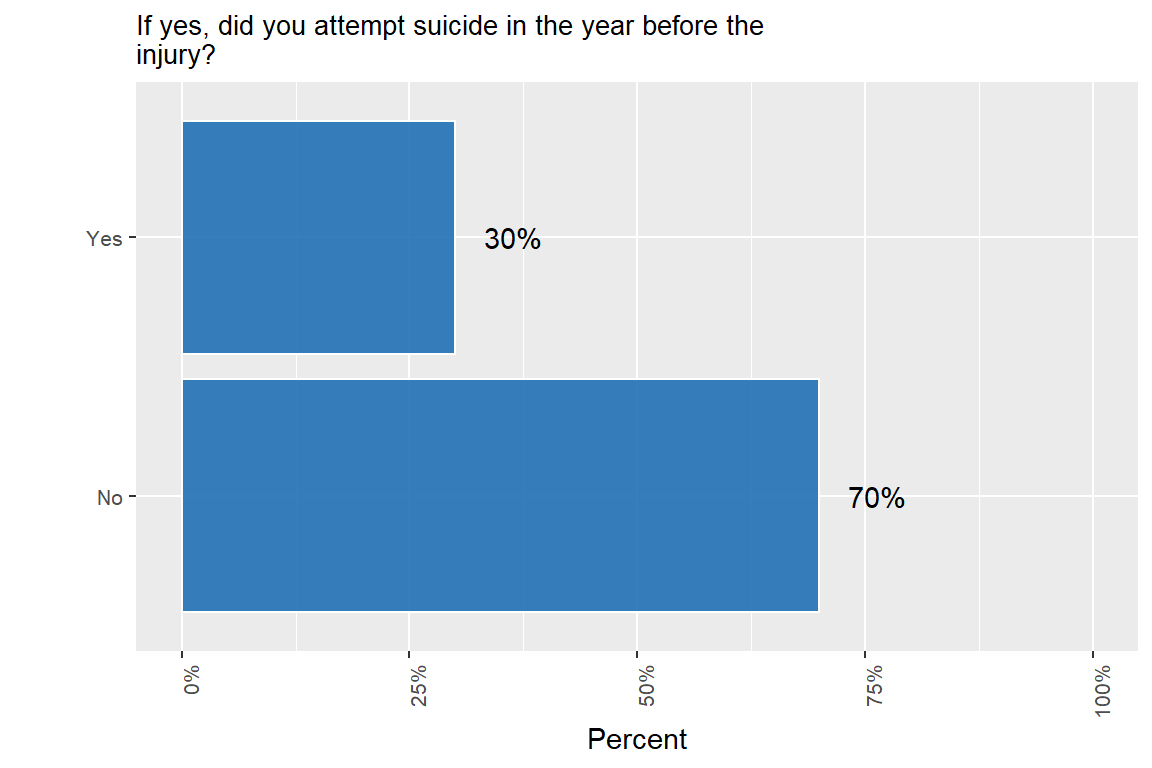
If yes, this question is followed up by asking “Did you ever attempt suicide in the year before the injury?”
Form 2
Asks “In the past year, have you attempted suicide?”
[X] Form 1
[X] Form 2
Form 1 Pre-Injury History (participant or proxy)
Form 2 Interview, Mail-Out (participant or proxy)
| Characteristic | N = 14,106 |
|---|---|
| Have you ever attempted suicide?, n (%) | |
| No | 13,092 (95) |
| Yes | 732 (5.3) |
| Missing | 282 |
| If yes, did you attempt suicide in the year before the injury?, n (%) | |
| No | 532 (71) |
| Yes | 221 (29) |
| Missing | 13,353 |
98% of the abstracted people have valid data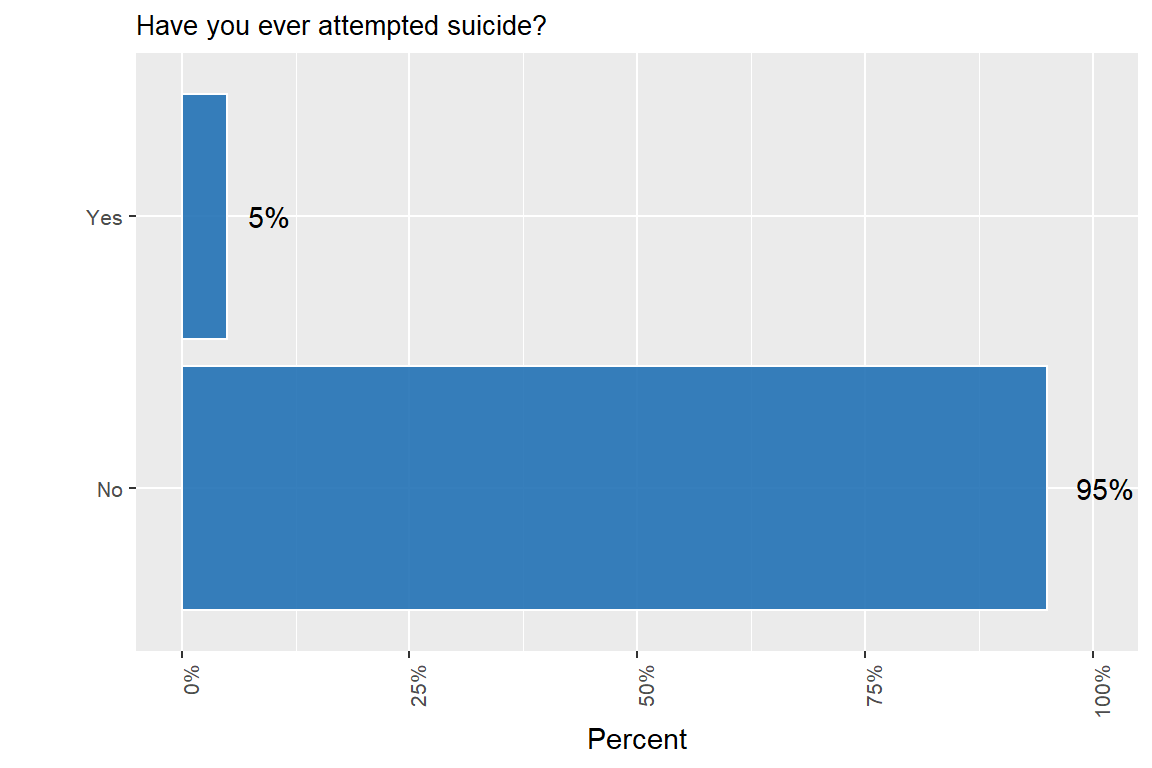
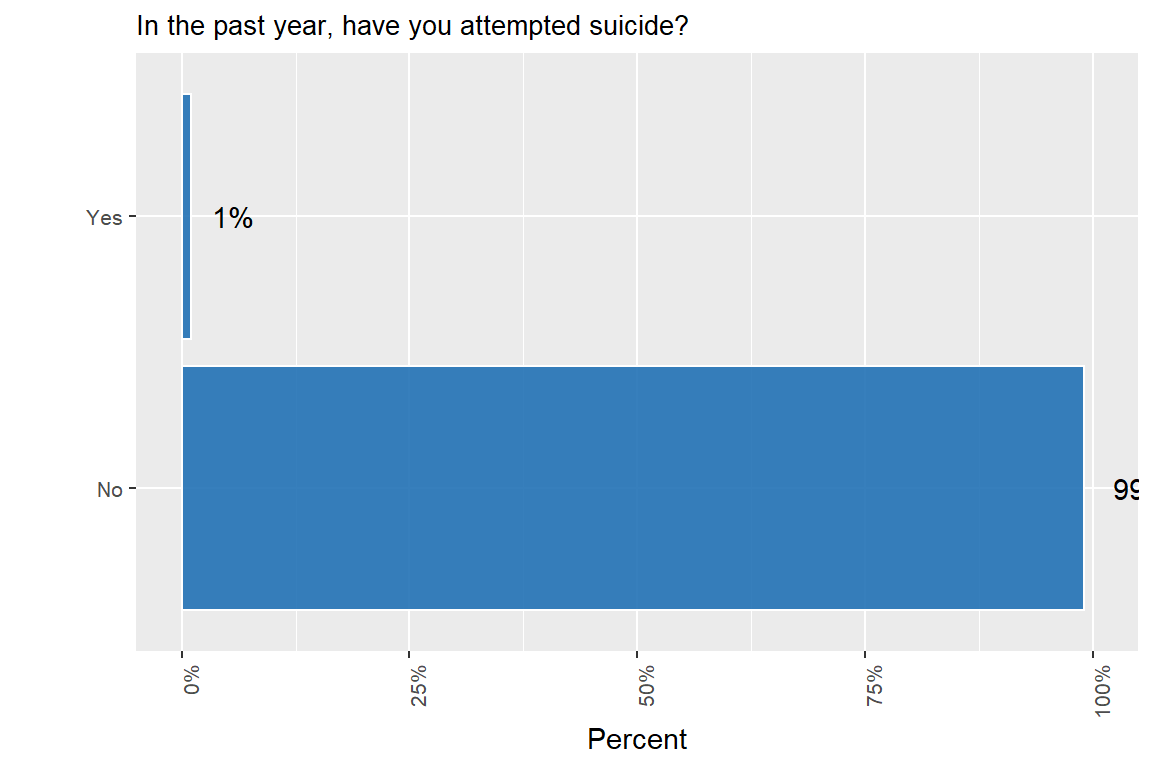
| Characteristic | N = 49,263 |
|---|---|
| In the past year, have you attempted suicide?, n (%) | |
| No | 46,641 (99) |
| Yes | 644 (1.4) |
| Missing | 1,978 |
96% of the interviewed people have valid data